|
FEATURE |
ADVANTAGE |
PRACTICAL USE |
|
SOUDAFRAME PROFILE (GFREP FRAME ELEMENT) |
|
|
|
SOUDAFRAME PROFILE (PRE-ASSEMBLED FRAME) |
|
|
|
SOUDAFRAME CLIP 20 (SPRING CLIP) |
|
|
|
SOUDAFRAME (INTERGRATED SYSTEM) |
|
|


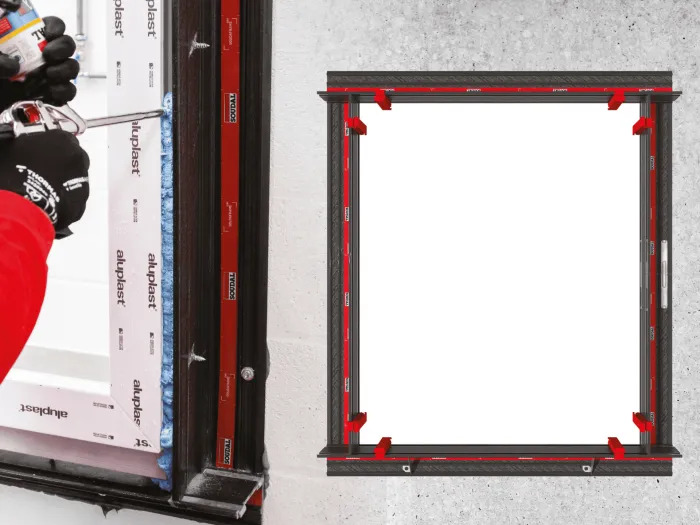
As energy efficiency standards for new buildings continue to increase, insulation performance has become a critical focus. For optimal thermal performance, windows should be installed within the insulation layer. The better the insulation, the thicker the layer—and the greater the distance between the window and the supporting structure.
Traditionally, metal brackets are used to bridge this gap. However, as the distance grows, so does the size and mass of the brackets, which increases thermal conductivity. This can lead to thermal bridges—causing heat loss, condensation, and the risk of mold or moisture damage.
SOUDAFRAME SWI (Soudal Window Installation) is an innovative pre-wall installation system that solves this problem. Made from glass fiber reinforced plastic (GFRP), a high-strength, low-conductivity composite, the system offers a thermally optimized alternative to metal brackets. The L-shaped frame elements are lightweight, slim, and easy to assemble into a complete pre-frame using plug-in connectors. A specialized adhesive provides both bonding and sealing in one step for an airtight, watertight connection to the wall, while spring clips ensure precise window positioning without the need for metal fixings.
By integrating seamlessly with the insulation layer, SOUDAFRAME SWI enhances the thermal envelope of the building. It guarantees a custom-fit, dimensionally accurate pre-frame with consistent joint dimensions—regardless of surface irregularities. This ensures a standardized, high-quality installation that’s quicker, easier, and less prone to error. Suitable for all common window profiles and materials, the system is available in various sizes, making it a universal solution for energy-efficient construction.
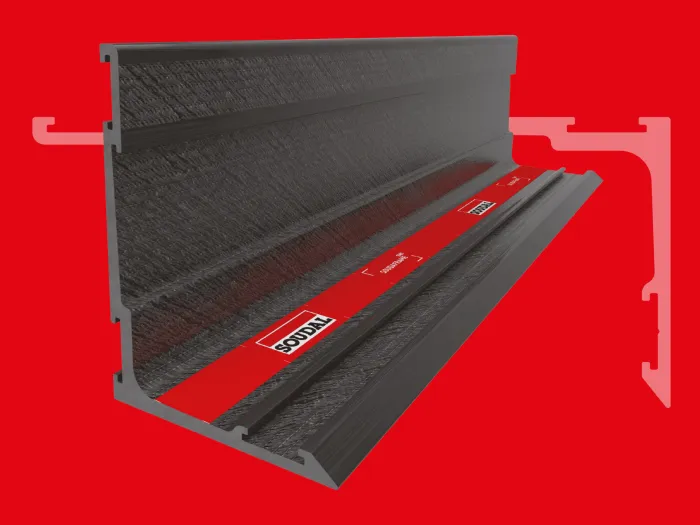
SOUDAFRAME SWI (Soudal Window Installation) is a smart, pre-wall mounting system for exterior joinery, engineered from glass fiber reinforced plastic (GFRP) — a high-performance composite material that combines durability, strength, and excellent thermal properties.
GFRP consists of two key components: glass fibers, which provide mechanical reinforcement and absorb tensile forces, and a reactive resin matrix, which distributes compressive loads. One of GFRP’s greatest advantages is its adaptability—its properties can be tailored to meet the specific demands of the application. That’s exactly what Soudal has done with the GFRP frame elements of the SOUDAFRAME SWI system, maximizing the material’s potential for construction use.
Already proven in industries such as aerospace, automotive, rail, and sports equipment, GFRP brings clear advantages to construction: high load-bearing strength, superior thermal insulation, weather and corrosion resistance, and dimensional stability—all while remaining lightweight. Unlike traditional materials, GFRP does not shrink, expand, or degrade under environmental stress.
Additionally, the production process for GFRP is eco-friendly and energy-efficient. At the end of its lifecycle, the material is fully recyclable and often repurposed in cement manufacturing, further reducing environmental impact.
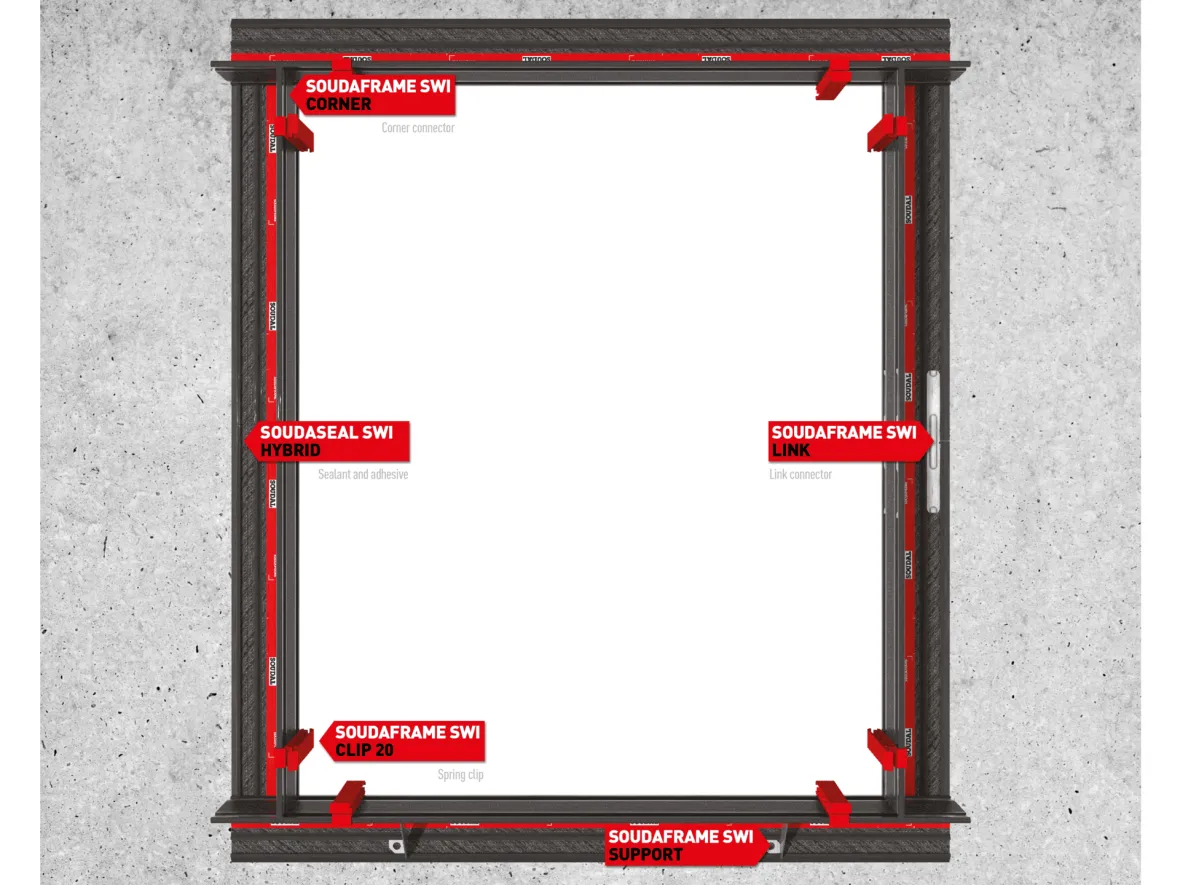
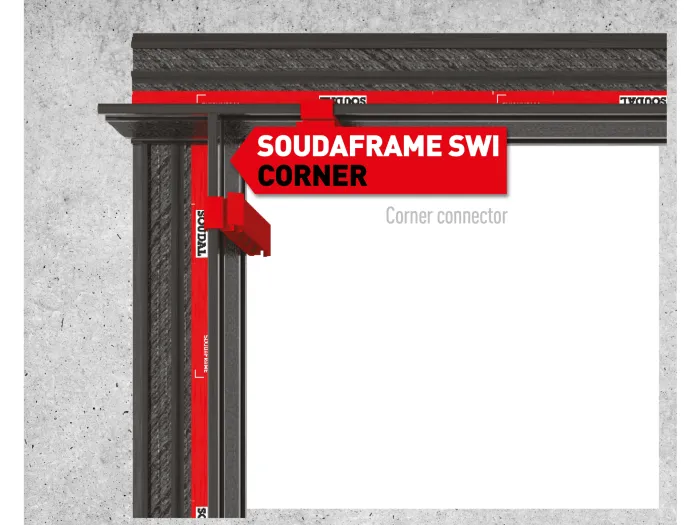
High-quality metal connection piece for an easy, safe and error-free connection of the frame elements. The innovative plug-in solution enables a fast installation and high flexibility on the construction site.
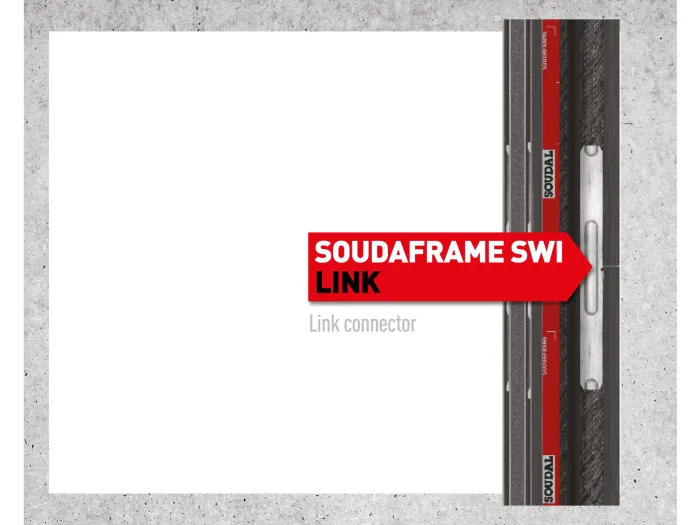
Connector for extending frame elements at e.g. large windows, use of cut-off frame elements.
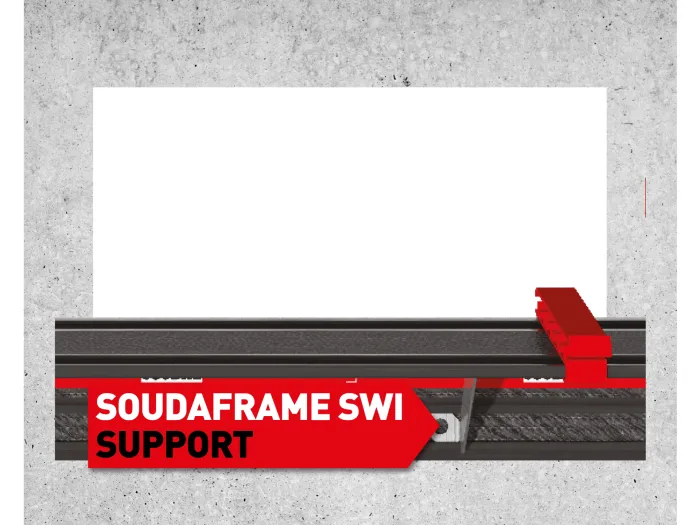
Support bracket for increased load transfer for large and heavy windows as well as for sliding doors.
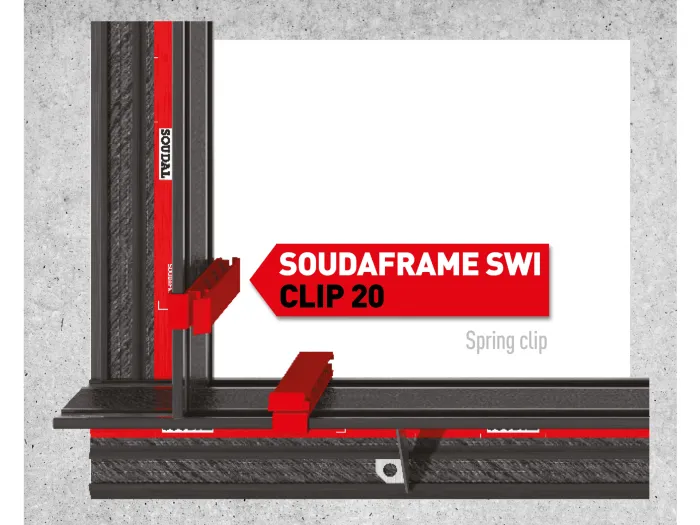
Practical installation aid for an automatic fixation and easy alignment of the window frame in the subframe. The pressure of the spring clip holds the frame into place and allows easy adjustment by hand. No more hassle with looking for the right size wedge.
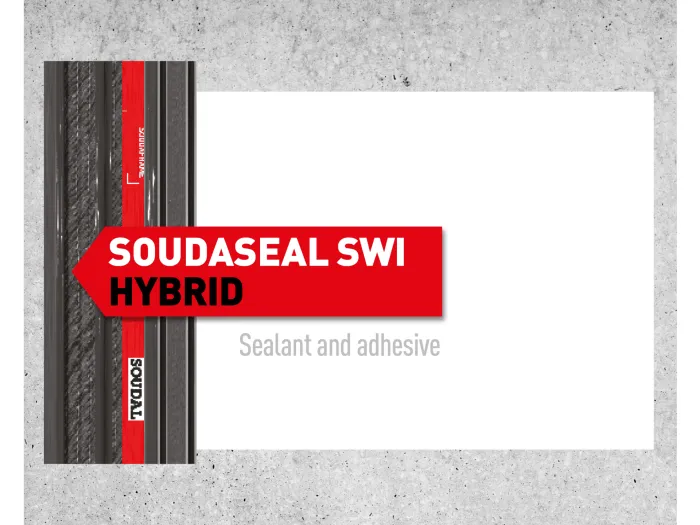
Elastic, one-component adhesive and sealant based on hybrid polymer with a very high initial tack. Soudaseal SWI was specially developed for bonding and air- and watertight sealing of the SoudaFrame SWI pre-wall window installation system.
|
FEATURE |
ADVANTAGE |
PRACTICAL USE |
|
SOUDAFRAME PROFILE (GFREP FRAME ELEMENT) |
|
|
|
SOUDAFRAME PROFILE (PRE-ASSEMBLED FRAME) |
|
|
|
SOUDAFRAME CLIP 20 (SPRING CLIP) |
|
|
|
SOUDAFRAME (INTERGRATED SYSTEM) |
|
|
The energy performance of buildings in Europe is regulated through key EU directives aimed at improving sustainability and reducing energy consumption. The foundation was laid by Directive 2002/91/EC, also known as the Energy Performance of Buildings Directive (EPBD). This directive supported the EU’s “20-20-20 targets,” which aim to achieve the following by referencing 1990 levels:
As progress toward these goals was insufficient, the EU introduced Directive 2012/27/EC, which came into force in December 2012. This directive focuses on improving energy efficiency, especially in existing buildings, and encourages sustainable renovation practices.
A major update came with the recast Directive 2010/31/EC, which introduced stricter requirements for both new constructions and renovations. It also enhanced the importance of energy performance certificates and introduced the concept of NZEB (Nearly Zero Energy Buildings). As of 2021, NZEB has become the standard for all newly built houses across Europe. Since this is EU legislation set out in a directive, each member state must translate it into national law and implement it through local energy policies.
|
AIRTIGHTNESS |
THERMAL BRIDGES & JOINTS |
|---|---|
|
As the insulation of houses is improving the importance of ventilation is increasing with regard to energy loss. Part of this loss is caused by the infiltration and exfiltration of air through materials and openings in the building envelope. To limit this loss, the aim is to achieve good ‘airtightness’ of the building’s envelope, which will also reduce the risk of damage and draft.
|
In many European countries, the energy performance calculation must take into consideration any thermal bridges (cold bridges) in a building. This is quite logical as poorly executed building knots may lead to large transmission losses resulting in an average heat loss of 5% (for an average house). Designers must therefore pay attention to joints, especially joints between various construction elements. Window-to-wall joints, for example, are important potential thermal bridges, which easily amount to 100 meters for an average house.
|