
thermal insulation

Thermal insulation

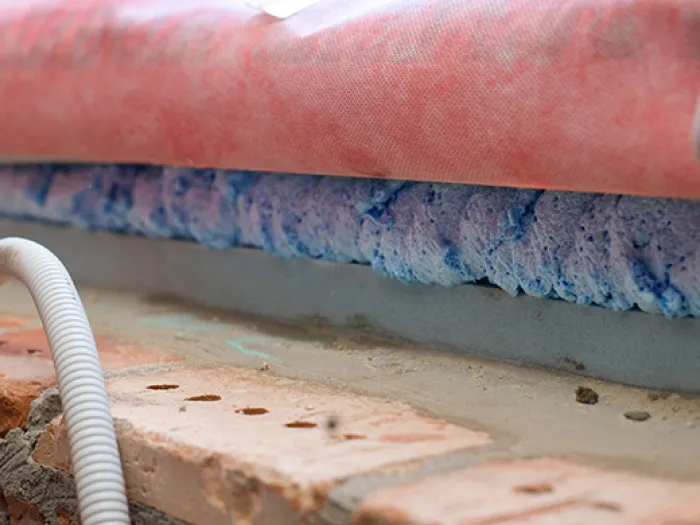
If seams, joints or holes appear in the building shell, the building loses part of its airtightness and insulation. Such openings can be filled using a one-component polyurethane foam in order to ensure the airtightness and insulation properties of the building element.

Advantages:

  • Ensures an airtight seal*
  • High thermal and acoustic insulation values*
  • Very accurate dosage enables faster finishing
  • High form stability (no crimping or post-expansion)
  • Large filling capacity with less swelling tendency

Suitable for most substrates and materials**:

  • Concrete, brick, natural stone, cellular concrete, sand lime bricks, cement substrates, etc.
  • Metal substrates, wood, PVC
  • Painted substrates
  • Wood substrates

* For joints and openings where more movement is likely, it is best to use Flexifoam to ensure long-term airtightness and insulation. Flexifoam has higher expansion properties and an improved elastic composition.

**Not to be used on polyethylene (PE), polypropylene (PP) or Teflon (PTFE) substrates.