
Airtightness
It is clear that it has gradually become very difficult to meet the EPB requirements without paying attention to airtightness. That's entirely logical, as uncontrolled ventilation losses are the reason for large amounts of heat loss, draughts, poor acoustics and moisture problems. Good airtightness and a high-quality building shell go hand in hand.
Furthermore, a good V-50 value (m³/h per square metre of the building shell) – the result of an airtightness test, the blower door test – remains one of the most economical ways to lower the E value and, since 2018, the S value.
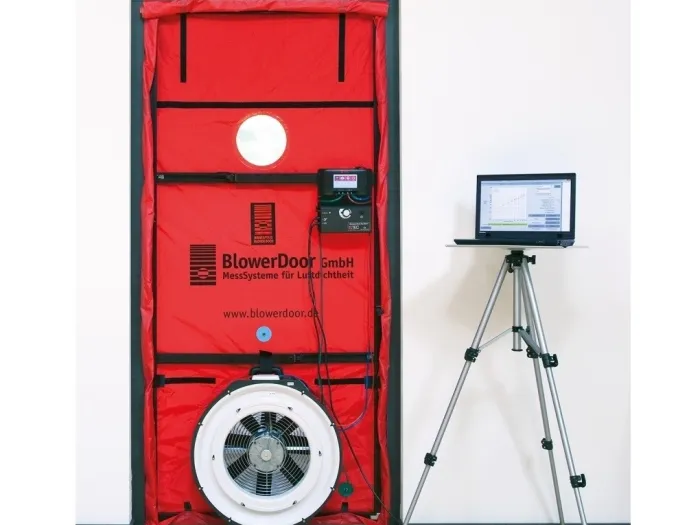
Blower door test
The Flemish Energy Agency (VEA) states the following:
“A limited investment with a big impact on the E value: attention to airtightness when building a house (such as a leak flow of 2 to 3 m³ per hour per m²) can lower the E value by 5 to 15 points. If a house is not tested, it is assumed that it has a lesser airtightness of 12 m³ per hour per m². The net energy requirement will also substantially decrease.”
This airtightness test is regulated and its working method is set out in the European standard EN 13829 (method A or B). In Flanders, method A must be followed.
Tip
Do not wait to carry out an airtightness test until all the work has been completed. It's better to carry out an initial guidance test when the building is wind-tight. At this point, any large leaks can still be easily rectified. If you wait until the end, that always requires rework and the costs can mount up quickly.
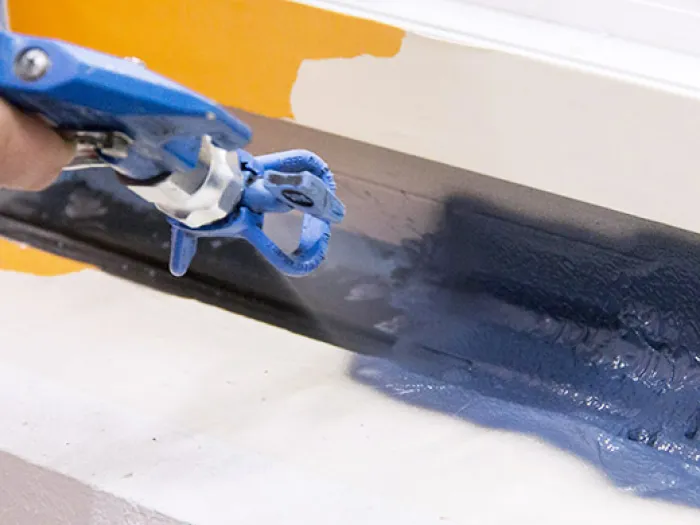
Window-to-wall joints are crucial and can easily amount to 100 m in an average house, while poor execution accounts for an estimated 15% of the total air loss in an average detached house. SWS, the professional window-to-wall system, can therefore make an important contribution to good airtightness.
The SWS model
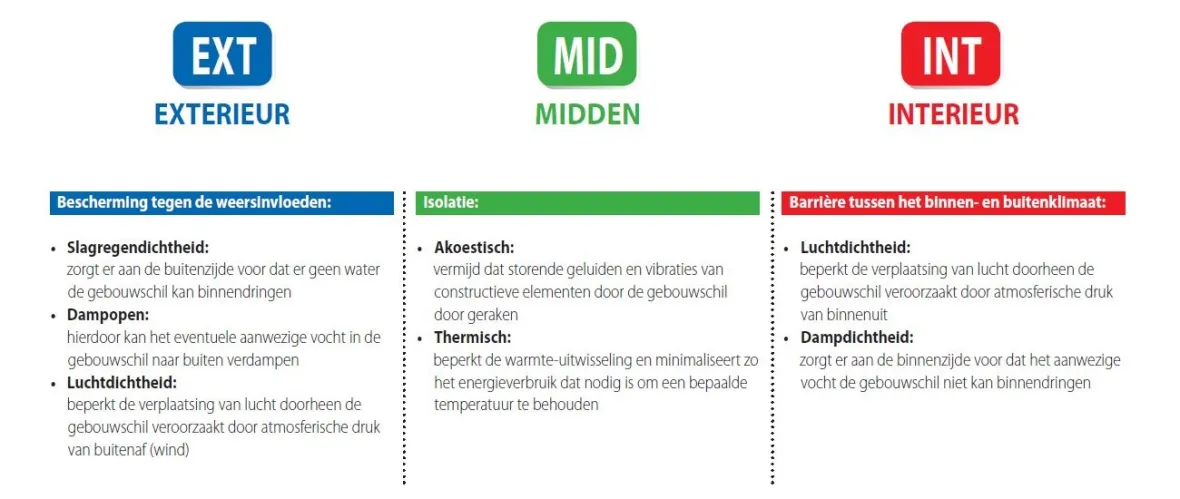
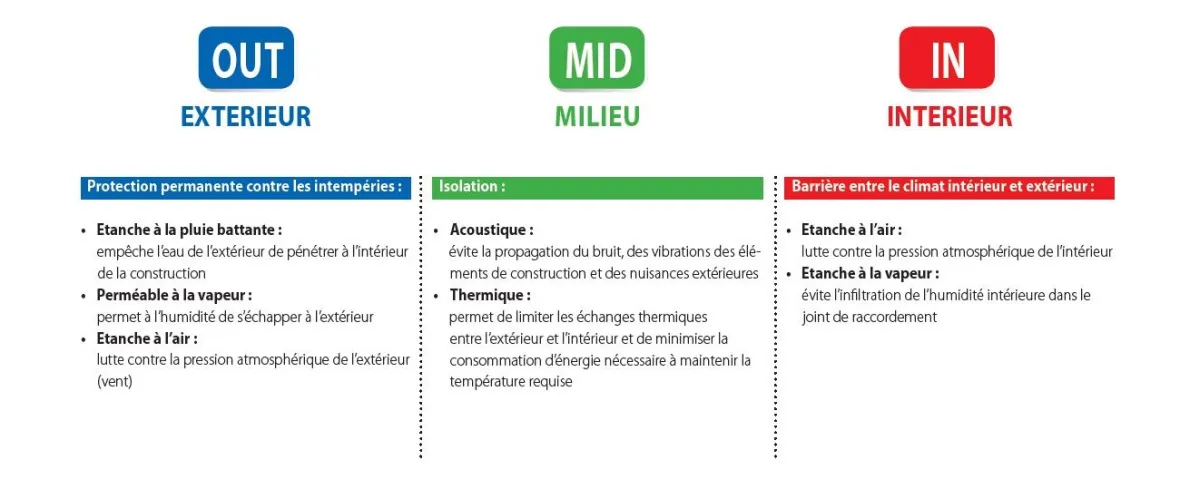
The optimal sealing of window joints consists of good airtightness on the inside, thermal and acoustic insulation in the middle, and excellent protection against the elements on the outside.